
Winter brings more than freezing temperatures and snowfall. For businesses, it also brings a new set of challenges involving equipment storage, inventory management, facility space and seasonal operations.
Construction companies need somewhere to store tools and equipment between projects.
Landscapers must transition from summer equipment to snow removal operations. Retailers need room for seasonal merchandise, while manufacturers and distributors may find their warehouses filled with supplies and inventory.
As temperatures drop, having the right winter storage solution becomes an important part of protecting business assets and maintaining efficient operations.
For businesses throughout Ohio, Pennsylvania and West Virginia, renting a portable storage container or commercial storage trailer offers a practical way to create additional space without committing to a permanent building expansion or off-site warehouse.
Buckeye Trailer Sales & Rentals provides on-site storage solutions that help businesses prepare for changing seasonal demands, with storage containers and trailers delivered directly to their locations.
Why Winter Storage Planning Matters for Businesses
Winter can expose storage problems that are easier to manage during warmer months.
Equipment that previously sat outside may need additional protection. Seasonal inventory can take up valuable warehouse space. Snow removal equipment needs to remain accessible, while machinery and supplies that won't be used until spring must be stored somewhere secure.
Without a storage plan, businesses may face several operational challenges:
- Limited indoor space: Equipment and supplies compete for valuable warehouse, garage and workshop space.
- Exposure to winter weather: Snow, ice, moisture and freezing temperatures can damage materials and equipment that are not properly protected.
- Operational inefficiencies: Crowded facilities can make it harder for employees to locate equipment, manage inventory and move materials.
- Seasonal equipment transitions: Businesses need to rotate equipment and supplies as their operations change throughout the year.
- Additional storage costs: Leasing permanent warehouse space for a temporary seasonal need may not be the most economical solution.
A well-planned winter storage strategy can help businesses organize their assets, reduce unnecessary handling and maintain access to important materials throughout the colder months.
For many companies, the solution is to bring additional storage space directly to their property.
On-Site Winter Storage: A Flexible Alternative to Expanding Your Facility
One of the biggest advantages of renting a portable storage container or commercial storage trailer is the ability to add space without modifying an existing building.
Instead of relocating equipment and inventory to an off-site facility, businesses can have a storage unit delivered directly to their location.
This allows companies to keep frequently needed supplies close to their operations while moving less frequently used items out of valuable indoor work areas.
On-site storage is particularly useful for businesses experiencing temporary seasonal changes.
A landscaping company, for example, may need additional room for lawn care equipment during the winter. A contractor may need secure storage for tools and materials while projects are delayed by weather. A retailer may need to reorganize inventory after the holiday shopping season.
Temporary storage container rentals allow businesses to adapt their available space as operational demands change.
What Should Businesses Store During the Winter?
Different industries have different winter storage requirements. Understanding what needs to be stored—and how frequently it will be accessed—can help determine the right storage solution.
1. Construction Equipment, Tools and Building Materials
For construction companies, winter weather can affect project schedules and the way materials are stored.
Tools, construction supplies, jobsite equipment and building materials may need to be secured when work slows or projects are temporarily suspended.
A portable storage container can provide a designated area for storing suitable equipment and supplies directly at a construction site, contractor yard or company facility.
Potential applications include:
- Hand tools and jobsite equipment
- Scaffolding components and accessories
- Construction hardware and supplies
- Building materials approved for unheated storage
- Temporary project inventory
- Equipment awaiting use on future projects
Keeping materials organized and accessible can help contractors reduce unnecessary transportation between jobsites and storage facilities.
However, materials sensitive to freezing temperatures or condensation may require insulated, heated or climate-controlled storage rather than a standard container.
2. Landscaping and Snow Removal Equipment
Landscaping businesses often experience a significant equipment transition as winter approaches.
Lawn mowers, trimming equipment, irrigation supplies and seasonal tools may no longer be needed daily. At the same time, snowplows, salt spreaders and winter maintenance equipment need to be accessible.
An on-site storage container can help separate equipment by season.
Businesses can move properly winterized, out-of-season equipment into temporary storage while reserving indoor garage or shop space for machinery that will be used throughout the winter.
This approach can be especially useful for landscaping companies that also provide snow and ice management services.
Before storing powered equipment, follow the manufacturer's winterization and fuel-storage instructions. Never operate combustion engines inside a storage container.
3. Retail Inventory and Seasonal Merchandise

Retailers face two distinct storage challenges during winter: managing the holiday shopping rush and handling merchandise after the season ends.
During the holidays, additional merchandise, packaging materials and promotional displays can overwhelm existing stockrooms.
After the holidays, businesses may need somewhere to store seasonal fixtures, decorations, excess inventory and other materials until they are needed again.
A commercial storage trailer or portable storage container can provide temporary overflow space without requiring a permanent warehouse expansion.
For businesses handling palletized merchandise, Buckeye Trailer's fork truck accessible storage trailers can be particularly useful for loading and unloading inventory.
4. Manufacturing and Industrial Supplies
Manufacturers and industrial businesses frequently need additional space for raw materials, spare parts, packaging supplies and finished products.
During winter, keeping these materials organized can become more challenging as businesses move weather-sensitive operations indoors.
On-site storage can help manufacturers:
- Free up production floor space
- Store suitable non-temperature-sensitive supplies
- Organize spare parts and maintenance materials
- Accommodate temporary inventory increases
- Create additional room during facility renovations or equipment installations
Storage containers can serve as an extension of existing warehouse operations when properly positioned and used for compatible materials.
5. Property Management and Facility Maintenance
Commercial property managers, apartment communities, schools and maintenance departments often need storage for seasonal supplies and equipment.
Outdoor furniture, landscaping supplies, maintenance tools and event equipment may need to be relocated as winter approaches.
Portable storage containers provide an option for keeping these materials organized on-site rather than using valuable maintenance rooms, garages or other interior spaces.
Portable Storage Containers vs. Storage Trailers: Which Is Better for Winter?
Businesses considering temporary winter storage generally have two practical options:
ground-level portable storage containers and commercial storage trailers.
Both offer additional space, but the right choice depends on the materials being stored, how they will be handled and the available space at the location.
Portable Storage Containers: Convenient Ground-Level Access
Portable storage containers are useful when businesses need secure storage with access at ground level.
Buckeye Trailer offers portable storage containers in several sizes:
- 20-foot storage containers: Suitable for smaller storage requirements, tools, supplies and seasonal equipment.
- 40-foot storage containers: Designed for businesses requiring additional capacity for equipment, inventory and materials.
- 40-foot high-cube containers: Provide additional interior height for larger or taller items.
Buckeye's portable storage containers feature sturdy construction, lockable cargo doors and watertight designs.
These characteristics make them useful for businesses looking to store suitable equipment and materials on-site during winter.
Ground-level access can be especially beneficial when employees need to move items manually or with appropriate material-handling equipment.
Commercial Storage Trailers: Additional Capacity for Inventory and Palletized Materials
Commercial storage trailers can be a better fit for businesses managing larger quantities of inventory or materials that are frequently moved using fork trucks.
Buckeye Trailer offers storage trailers ranging from 45 to 53 feet, with swing-door and roll-up-door options.
All of Buckeye's storage trailers are fork truck accessible, making them useful for businesses that need to load and unload palletized merchandise or supplies.
Storage trailers can be positioned at commercial facilities where space, access and site conditions permit.
For distributors, retailers and manufacturers, this can provide a convenient extension of existing inventory operations.
How to Choose the Right Winter Storage Solution
| Consideration | Portable Storage Container | Commercial Storage Trailer |
|---|---|---|
| Access | Ground-level entry | Elevated trailer-floor entry |
| Available sizes | 20′, 40′ and 40′ high cube | 45′–53′ |
| Typical applications | Equipment, tools, supplies, seasonal materials | Bulk inventory, pallets, commercial overflow |
| Loading | Ground-level handling | Fork truck accessible with suitable loading arrangements |
| Placement | Requires a suitable ground-level delivery area | Requires adequate trailer access and positioning space |
| Rental options | Available | Available |
The best choice depends on your available property space, storage requirements and loading procedures.
How to Prepare Equipment and Inventory for Winter Storage
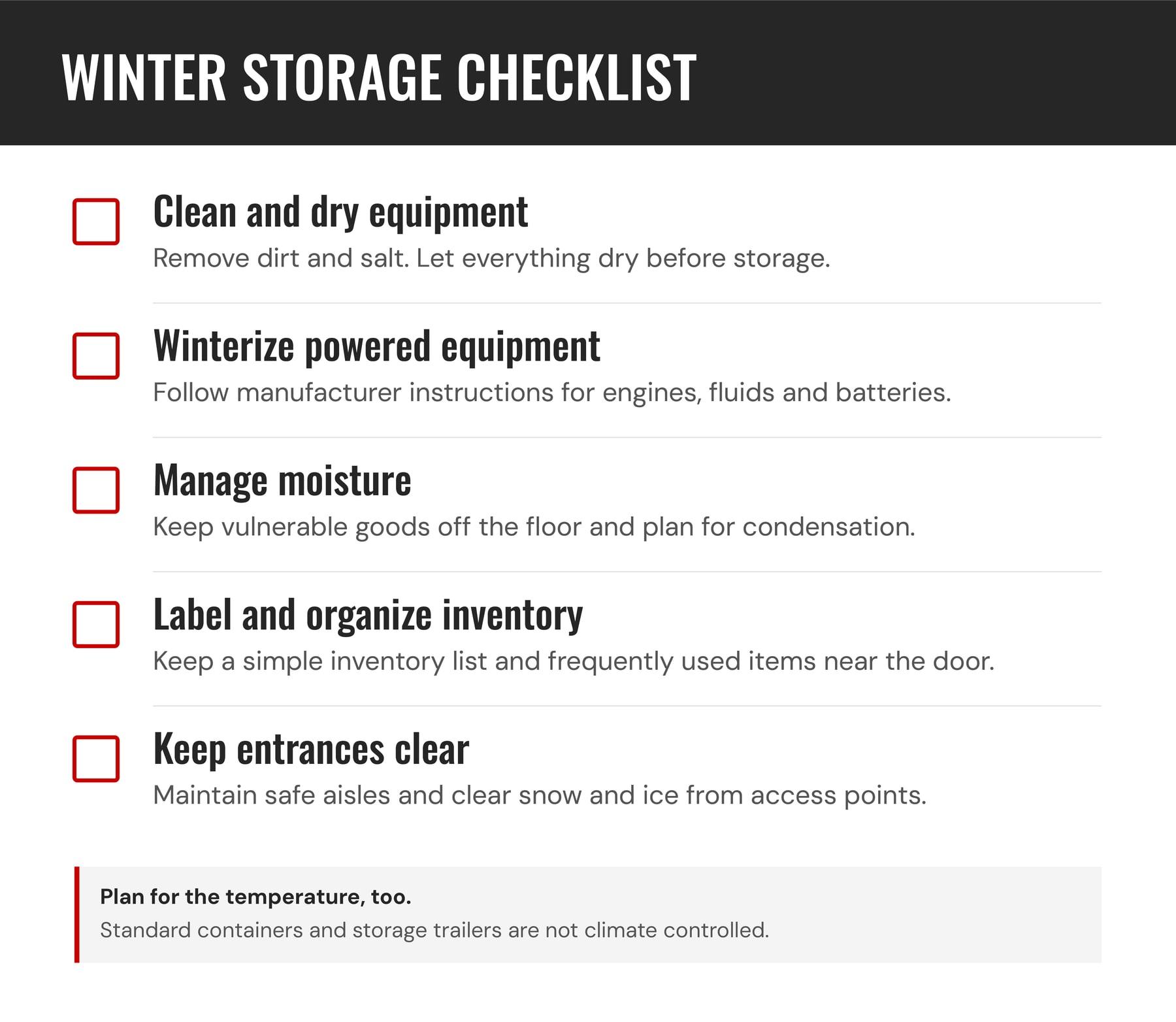
Renting a storage container is only one part of a successful winter storage plan. Proper preparation is equally important.
Here are several steps businesses should take before placing equipment or materials into seasonal storage.
Clean and Inspect Equipment Before Storage
Dirt, debris, moisture and road salt can contribute to corrosion and deterioration during extended storage.
Before putting equipment away for the season, clean it thoroughly and inspect it for existing damage.
Allow equipment to dry completely before storing it, particularly if it contains exposed metal components or electrical connections.
Protect Materials From Moisture and Condensation
Even watertight storage containers can experience internal condensation when temperatures and humidity fluctuate.
This is particularly relevant during Midwest winters, when temperatures may move above and below freezing.
Use pallets, shelving or other appropriate supports to keep vulnerable materials off the floor when necessary.
Avoid placing damp items into storage, and consider moisture-control measures for compatible goods.
Standard storage containers and trailers should not be assumed to provide climate-controlled conditions.
Organize Storage for Easy Access
An organized storage container can save time when equipment or supplies are needed unexpectedly.
Place frequently accessed items near the entrance and clearly label stored materials.
Maintain safe access paths and avoid blocking doors or overloading shelves.
Businesses storing multiple categories of inventory should consider creating a simple inventory list showing what is stored and where it is located.
Follow Proper Equipment Winterization Procedures
Equipment containing engines, batteries, fluids or other sensitive components may require special preparation before extended storage.
Follow manufacturer recommendations for winterizing equipment, including any applicable instructions for batteries, fuel systems and lubricants.
Flammable materials, fuels, chemicals and other hazardous substances should only be stored in approved conditions that comply with applicable safety requirements.
Keep the Storage Area Accessible During Snow and Ice
When selecting a location for a storage container or trailer, consider more than where the unit will fit.
Snow removal, drainage, delivery access and pedestrian safety should all be part of the decision.
Choose a suitable, stable surface and maintain adequate clearance around doors and access points.
Avoid locations where plowed snow could block entrances or where runoff may accumulate.
For storage trailers, verify that the location can safely accommodate the trailer and any required loading equipment.
Should You Rent or Buy a Storage Container for Winter?
One of the most common questions businesses face is whether temporary storage should be rented or purchased.
The answer depends largely on how long the additional space will be needed.
Renting may make sense when:
- Storage requirements are seasonal or temporary.
- Additional space is needed for only a few months.
- A construction project or renovation has created a short-term storage problem.
- A business wants flexibility without committing to ownership.
- Inventory or equipment volumes fluctuate throughout the year.
Buying may make sense when:
- Storage needs are ongoing or predictable year-round.
- A business has sufficient space for a permanent on-site unit.
- Equipment and materials need dedicated long-term storage.
- The company expects to use the storage unit for multiple years.
Buckeye Trailer offers rental and purchase options, including new and used storage units, allowing businesses to select a solution that matches their operational requirements.
When Should Businesses Arrange Winter Storage?
Ideally, businesses should begin evaluating winter storage requirements during the fall, before freezing temperatures and heavy snowfall create additional logistical challenges.
October and November are useful planning months for many businesses in Ohio and the surrounding region.
Preparing early gives companies time to determine what needs to be stored, organize their existing facilities and identify a suitable delivery location.
However, winter storage needs can arise at any time.
A construction delay, unexpected inventory shipment, equipment purchase or facility renovation can create an immediate need for additional space.
Buckeye Trailer provides delivery services and can help businesses evaluate available storage options based on their requirements.
Winter Storage Solutions in Cleveland, Ohio and the Surrounding Region
Businesses in Northeast Ohio experience a wide range of winter conditions, including lake-effect snow, freezing rain, ice and fluctuating temperatures.
For companies managing outdoor equipment, commercial inventory or seasonal operations, these conditions make storage planning especially important.
Based in Eastlake, Ohio, Buckeye Trailer Sales & Rentals has served customers since 1992 and provides storage solutions throughout Ohio, Pennsylvania and West Virginia.
The company offers:
- Portable storage containers in 20-foot, 40-foot and 40-foot high-cube sizes
- Commercial storage trailers ranging from 45 to 53 feet
- New and used storage units
- Rental and purchase options
- Lockable, watertight storage container options
- Fork truck accessible storage trailers
- Delivery directly to commercial and residential locations
Buckeye works with businesses to identify storage options suited to their space, budget and intended use.
Frequently Asked Questions About Winter Storage
What is the best way to store business equipment during winter?
For equipment that can safely be stored in unheated conditions, an on-site portable storage container can provide a secure, enclosed storage option. Equipment should be cleaned, dried and properly winterized before storage. Temperature-sensitive items may require climate-controlled facilities.
Can storage containers be used during winter?
Yes. Storage containers are commonly used for year-round storage, including winter applications. However, businesses should account for condensation, freezing temperatures, snow accumulation and the specific requirements of the items being stored.
Are storage containers waterproof?
Buckeye Trailer offers watertight portable storage containers designed to help keep outside precipitation from entering. However, watertight construction does not eliminate the possibility of condensation forming inside, particularly during temperature changes.
Can a storage trailer be delivered directly to my business?
Yes. Buckeye Trailer delivers storage trailers directly to customer locations in its service region, subject to delivery access, site conditions and availability.
What size storage trailer is available for commercial winter storage?
Buckeye Trailer offers commercial storage trailers ranging from 45 to 53 feet in length. These trailers are fork truck accessible and available with swing or roll-up doors.
Is it better to rent a storage container for three months or buy one?
For a short-term winter storage need, renting may be more practical because it avoids the upfront expense of purchasing a unit. Businesses with ongoing or recurring storage requirements should compare rental costs with the long-term cost of ownership.
Where can I rent winter storage containers near Cleveland, Ohio?
Buckeye Trailer Sales & Rentals, located in Eastlake, Ohio, offers portable storage containers and commercial storage trailers for rent or purchase, with delivery available throughout Ohio, Pennsylvania and West Virginia.
Get Ready for Winter With Buckeye Trailer Sales & Rentals
Winter storage challenges don't have to mean overcrowded warehouses, disorganized equipment or expensive permanent expansions.
With the right on-site storage solution, businesses can create additional space, keep materials organized and prepare their operations for seasonal changes.
Buckeye Trailer Sales & Rentals offers portable storage containers and commercial storage trailers for businesses that need flexible, convenient storage throughout the winter months.
Need additional storage space before winter weather arrives?
Contact Buckeye Trailer to discuss container sizes, trailer options, rental availability and delivery to your location.
Call 440-918-7772 or 800-409-0848 to request a quote.
Explore Storage Containers and Trailers | Contact Buckeye Trailer